sábado, 13 de noviembre de 2010

"That's Just the Way It Is"


"Give the crack to the kids who the hell cares
one less hungry mouth on the welfare
First ship 'em dope & let 'em deal the brothers"
TUPAC SHAKUR


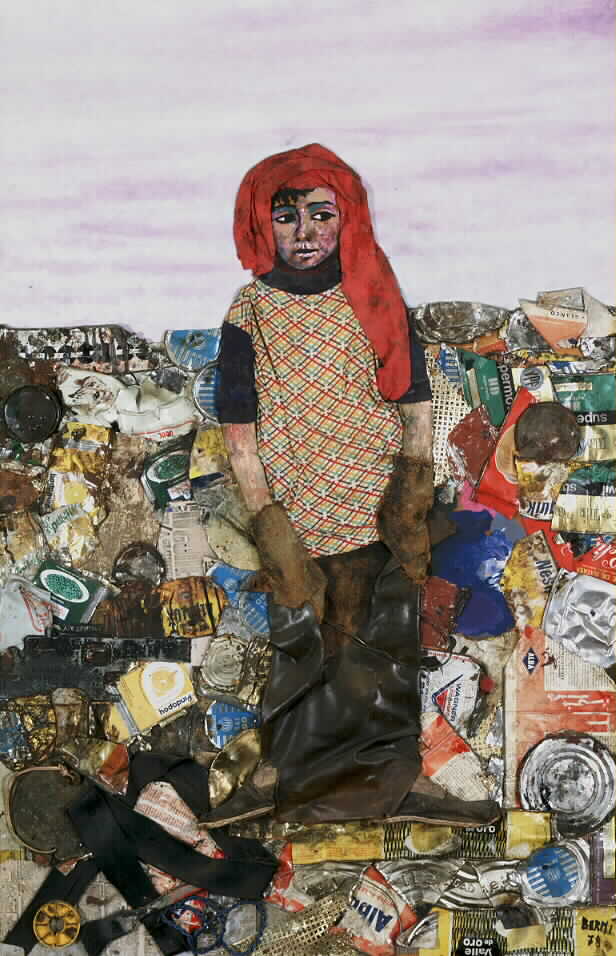
In the last few decades, Argentina has undergone several crises that have broadened the gap between the haves and the have-nots. Indifference, ignorance and hypocrisy tend to stir up hatred among social classes. Despite its attempts, the Government fail to tackle poverty successfully. In the meantime, citizens watch from their sofas.

To begin with, our society is far from being egalitarian. Our Constitution claims that the State will guarantee the fulfillment of citizens’ basic needs. However, education, proper nourishment and housing are usually neglected by most governments. Priorities always seem to be elsewhere. On top of it, as soon as a welfare policy is designed, many criticise the leaders in powere since, to their minds, laziness is fostered.

In addition, drug abuse is widely spread in our society. While most people would have difficulty finding as well as affording drugs, PACO - the most popular substance among the poor - is said to be readily available. Very young teenagers become addicted to this inexpensive version of cocaine which destroys them both physically and psychologically.

Furthermore, violence affects everyone's life. The media is obsessed with crimes. Newscasters maintain that our country’s main disease is connected with the high murder and theft rates. Trust in fellow citizens is undermined. Racial profiling is fostered. What many seem to ignore is the fact that the less privileged are constantly shown a lifestyle they cannot afford, a world where they do not belong. Is this not violent as well?

Finally, ignorance and discrimination do nothing to society but reinforce its weaknesses. The more you listen to the news, to common citizens or even to your friends, the more certain you are that few of them are looking forward to opening their minds and hearts. Little hope is left since everyone seems to demand solutions from others rather than actually doing something themselves.

To sum up, the current state of affairs is rather worrying. What is more, the level of decay in our moral standards and values is such that it is hard to imagine any improvement. As I see it, we should all face our fears and prejudices and ask ourselves what we are doing wrong and how we can contribute to a better tomorrow.

sábado, 6 de noviembre de 2010

A Guide to Argentine Men


Latin American men are said to be hot-blooded and passionate. In the case of Argentinian guys, you need to add a European touch - at least that is what they will expect you to believe! Let’s look into some essential tips you, as a female foreigner, must bear in mind in case you encounter this odd and still charming specimen.

The typical Argentinian man masters the art of flirting. At the least expected moment, he will approach and pour compliments on you. You will soon be wrapped up by these witty comments and the spell will be casted. Your self-esteem will swell and you will slowly surrender. Watch out: the moment you set off to the ladies’ he might start flirting with another girl!

The typical Argentinian man tries to keep up appearances and enjoys walking around with the lady he has conquered. He feels she is some kind of prey that allows him to increase his manly pride. Thus, looks do count as important in his book. This Latin exponent usually keeps fit and dresses smartly and expects his girl to act accordingly. Beware: he might enjoy admiring your looks as much as other girls’!

The typical Argentine man loves traditions, so he follows some sort of etiquette. He always opens any kind of door, barrier or gate and holds it for his lady . He usually helps women be seated and does not hesitate to give up his seat if necessary. He coughs thoughtfully and avoids spitting. So, if you believe chivalry is dead, meeting this South American gentleman might change your mind. Lo!1: you may end up feeling like a bimbo.Lo!2: he might be interested in some kind of reward after so much politeness.

The typical Argentine man makes his lady feel important but he is mainly attached to football, his friends and his mummy. He can make eye contact steadily but as soon as he catches sight of a TV and hears the word “ball”, “football” “score” or “goal” he turns into a zombie. No matter how hard he may have struggled to get a date with the lady he fancies, he will undoubtedly decline it if his friends get together or if his mum cooks his favourite dish. Conclusion: do not feel disappointed if he chooses his ma, dudes or the ball rather than you - he can’t help it.

On the whole, it does seem that Argentine men are far from being flawless. Yet, it is precisely these little imperfections that make them intriguing and surprisingly changeable. You may have read and heard lots about them but the best tip you can follow is definitely to try for yourself and to be ready for a mixed bag of experiences. After all, the Argie man is just a man and we all know what that means!


Do you want to see the typical Argentine men in action? Click HERE and HERE

jueves, 21 de octubre de 2010


On Picketing


Picketing has become a common form of protest.The organizers and participants claim that blocking streets is the only effective way to draw public attention to a cause while other people sustain it does nothing but undermine the constitutional right of free circulation.


Firstly, opponents of picketing usually argue that new ways of protest should be thought of. As they see it, the circulation of citizens is a right that must be granted at all costs. Consequently, demonstrations in stadiums or big open areas ought to be encouraged. Besides, the public force should not hesitate to use riot control measures so as to discourage the blocking of streets.


Secondly, the media strongly disagrees with picketing. Whenever a block on any street is broadcast, the focus is always set on the chaos the city’s traffic has been turned into rather than on the picketers’ demands. The reports usually include interviews with drivers who have been prevented from going through and are, thus, furious and cannot provide a balanced reflection.


In contrast, a part of society manages to understand that picketers represent the lower classes, unemployed or underpaid workers, young mothers, and such other people who tend to be ignored by most. As Eduardo Galeano (1) calls them, the “nobodies,...those who are not, even though they are, those who are not human beings but rather human resources.” Therefore, the best course of action they have found to be heard is annoying fellow citizens.


Furthermore, all citizens have rights and it is hard, if not impossible, to decide whether some outweigh others. The right to the circulation of people is an example, but so is the right to equal treatment. Nourishment and housing as well as a decent job are connected with survival. Although it is the State’s obligation to respect, protect and fulfil these rights’ essential features, not always do priorities benefit the weakest.


All things considered, it must be said that having a clear stand on picketing seems hard as far as its appropriateness and effectiveness are concerned. As I see it, the right to hold demonstrations must be treasured as much as any other. All citizens are equal and it is our duty not to let individualism prevail.


SCs & AWRs

jueves, 30 de septiembre de 2010

Ecuador


I've just heard the news about our dear Ecuador. I can't believe this is actually happening. It's so sad and frightening at the same time. Why is our Latin America constantly threatened by these violent intolerant people.

miércoles, 29 de septiembre de 2010

Poster Presentation


Well, what can I say about yesterday presentations... I really enjoyed listening to my fellow classmates talk about the topics they had chosen, they were all really enthusiastic. And the posters! They were wonderful.

As for my own presentation...well, well. To begin with, my poster looked as if it had been used as a tablecloth in Palermo on Sept 21st. I must say the poor piece of paper had travelled in the San Martin train, the 146 bus and the subway. Anyway, this excuse is not good enough. My classmates' comments are definitely subjective. Only ONE thought I needed to improve my visual aids. Thanks for stroking my self-esteem but let's face, it can be better.

As regards the presentation itself, I forgot to say the most important thing at the right moment. GRRR! Again, the feedback sheets from my fellow classmates said things like the information being in the poster. Still, bad girl. If I had given out the copies of the abstract (which I had run!) I could have organised my talk more effectively.

I wish I could speak more slowly! I can't help it. On top of it, I imagined that at any moment we were going to be interrupted by the drill so I stepped on it! I had recorded myself and it took me 10 minutes so, in my mind I was thinking I had to make it in 5. You witnessed the consequences.

I suppose my voice and attitude were ok. Even though I don't like these talks, I look friendly and somehow confident. If only you knew what's going on deep inside!!!

That's about it! I suppose I'll be sharing my poster again next week. I'll do my best to improve! What a challenge!

Here is the abstract I never shared with you - selfish me!


Teaching English to Low-educated, Low-literate Adults.

Increased demand of high-skilled workers as well as social prestige often make people face the challenge of learning English. In the case of low-educated, low-literate learners, the test is even greater.The number of hours of instruction required for grasping concepts and perceiving progress are almost discouragingly long both for students and teachers. Most instructors working with these groups have not been sufficiently trained. Thus, even the most experienced ones may shy away from this slow and often rather frustrating task. This poster presentation is empirically based and focuses on some of the strategies tried out as well as the failures and achievements in some privately-run courses in the City of Buenos Aires.


sábado, 11 de septiembre de 2010

My experience of writing


Last summer I was at my aunt's and out of the blue she produced two pieces of paper from a drawer. One was a letter I wrote when I was a little girl complaining to my mum about my uncle asking me to take a nap every afternoon. The other was a short poem about animals I made up after spending an afternoon on my granpa's farm.

When I was a child, writing used to be fascinating and meaningful. Even if it was a task from school, it meant a chance to share. I suppose I was enchanted by this universe of letters and words that allowed me to discover other people's universe and them to peep into mine.

As I grew older I found myself writing only when it was strictly necessary, when I was asked to, for instance, by teachers. I never found it difficult, though. Ideas always seemed to come to mind and putting them together was not complicated. However, the aim was always to fulfil someone else's expectations. And, by the way, I sometimes failed to do so!

Time went by and nobody asked me to write any longer. Having said that, I have turned back to some paper and a pencil when there are too many confusing thoughts in my mind. I guess it has always somehow helped me cope with trouble, reflect on my ideas, ponder. Whenever obstacles seem overwhelming and decisions hard to make, putting concepts in black and white helps me to think more objectively.

Now I am writing as a student once again. I must say it feels good. Maybe I can manage to put together both the amazing world I once knew as a girl and the tool for having it off my chest. As a teacher, I have already started learning from the feedback I get from my classmates and tutors. So, I suppose the outcome will be a freshened-up writer and educator as well.

Biodata

Silvina Bustos is a year 3 student at Joaquin V Gonzalez Teacher Training College. She has taught English to adults for 15 years. She has worked on literacy and self-steem programs to help students develop their learning strategies.